A composer learned what she could do with AI
She had the work but no shopfront: the domain was being paid for while the site stayed shut, and which of the five professions on her CV should lead was still undecided.

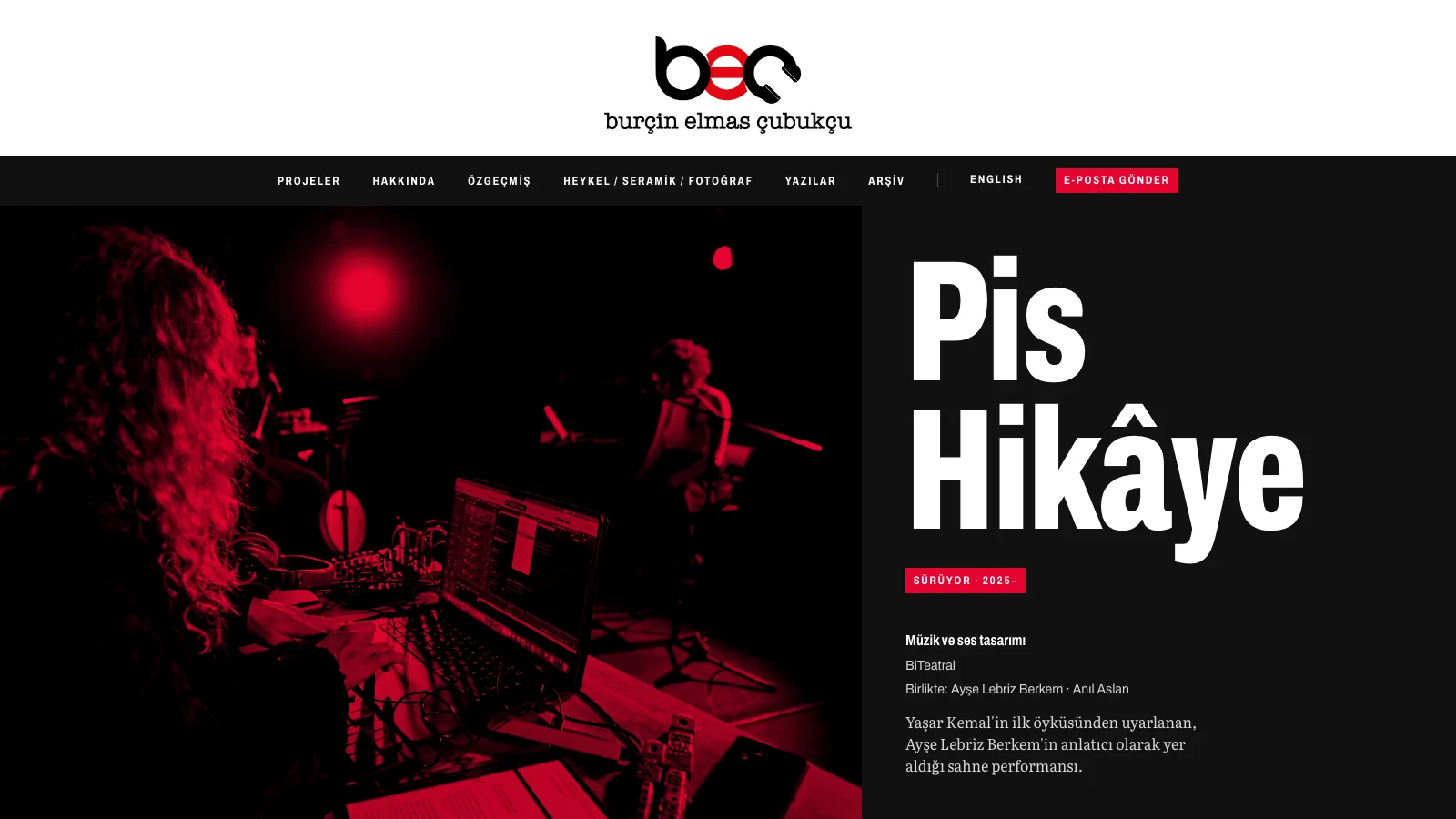
Quotes are translated from Turkish. Where the exact wording carries the claim, the Turkish original is printed underneath the translation.
The problem
Burçin Elmas Çubukçu is a composer and sound designer. She writes for stage and screen, improvises on alto saxophone and makes video work; alongside that there is ceramics and writing, and a doctorate in progress.
She is not someone who had never met code. At university she worked on DSP and audio compression and used Java and Max MSP; her master’s thesis was a live accompaniment system she built in Max MSP — a timer starts, it records at a note she chooses, runs it through effects and accompanies her for fifteen minutes. But that knowledge had gone rusty.
“I am coming at this from zero. It has been dormant since 2013. Before that I was quite into it. WordPress, HTML — I used to tinker.”
“Sıfır noktasından geldiğim bir yerdeyim. 2013'ten beri atıl bir şey. Ondan evvel bayağı ilgileniyordum. WordPress'ler, HTML'ler, uğraşıyordum.”
What she brought was modest: a portfolio site to apply with.
“There is a biennial, there is this, there is that. So I need things like a portfolio, a project presentation. I kept putting the website off.”
“Bienaldir, odur, budur. Dolayısıyla benim portfolyo, proje sunumu gibi şeylere ihtiyacım var. Web sitesini öteliyordum.”
The domain was registered in her own name, she was still paying for it, and the site was shut.
The harder part: which profession?
The non-technical side was the difficult one. When the AI read the CV it found five separate professions in it: electroacoustic composer, sound designer for theatre and video, improvising saxophonist, video artist, academic. Which of them would the first line of the home page name?
And there was the writing:
“I would rather not do the writing — tell me ‘let’s compose something, make a video’ and I will do that. But the writing parts, unfortunately, I was weak at.”
Where she started from
She had tried AI once, asking it for ideas for a piece of theatre music, and had not found what she was after:
“I thought it was no use to me, and that was that. I thought it was shallow.”
“İşime yaramadığını düşündüm ve o kadar. Sığ olduğunu düşündüm.”
She made her own diagnosis as well:
“I accept that I was not getting what I wanted because I was weak on the prompting side.”
“Prompt kısmında zayıf kaldığım için istediğim şeyi alamadığımı kabul ediyorum.”
The distance was not a technical one:
“I do not really know why I have been resisting using AI. This data that is given, the things that are written — where are they kept? And they are fed into this algorithm, aren’t they?”
“Ben niye direndiğimi tam bilmiyorum yapay zeka kullanmaya. Bu verilen veri, yazılan şeyler nerede tutuluyor? Ve bu algoritmanın içine dâhil ediliyor, değil mi?”
The process
One to one, over screen share, on her own material. Spread across five weeks.
- Together — going through the data permissions, the setup, the portfolio's content decisions, the design direction, connecting the domain to the live site
- Between lessons — running the design tool herself, not liking the result and writing her own prompts; setting up the second computer; changing a heading on the site herself
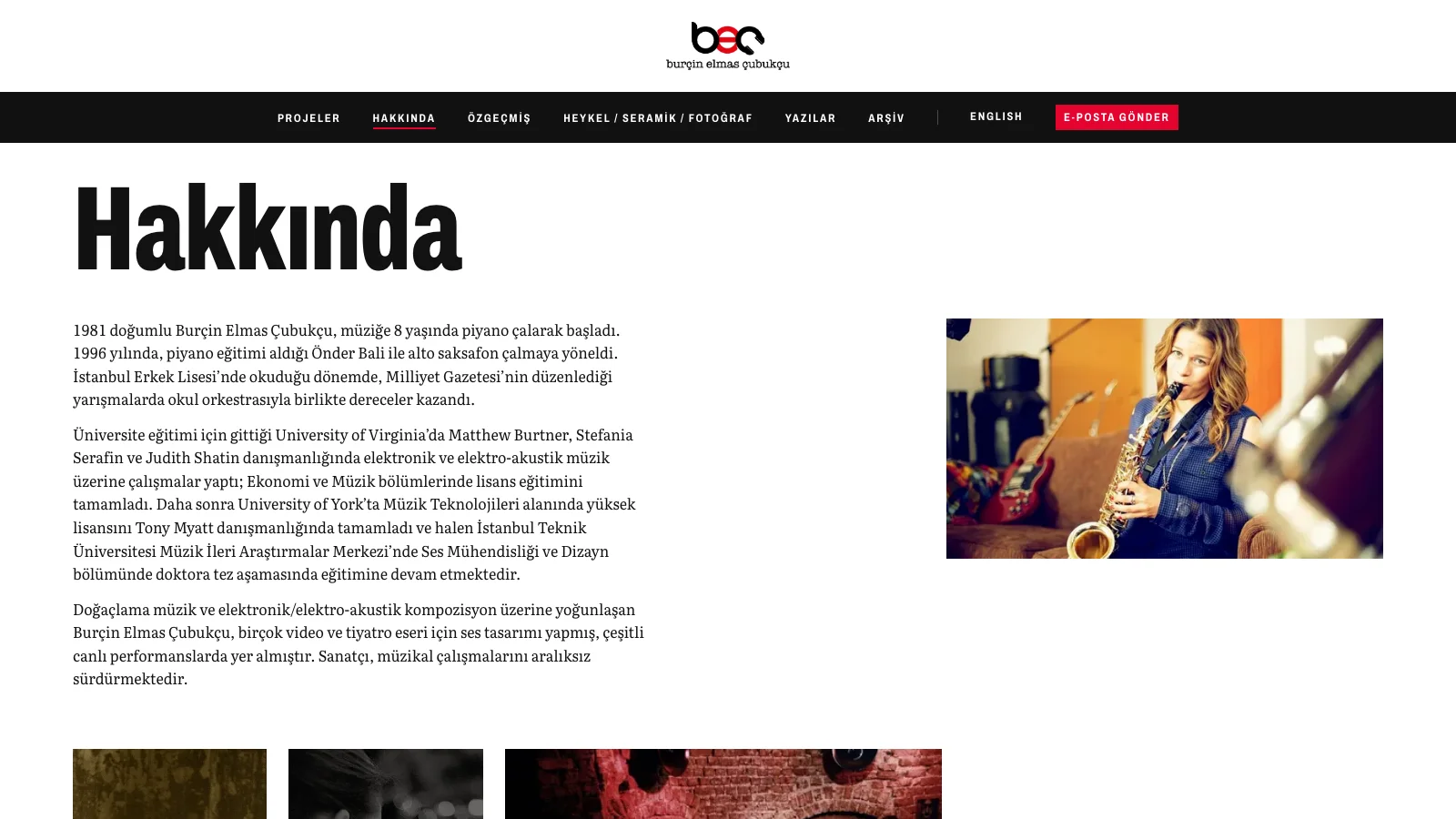
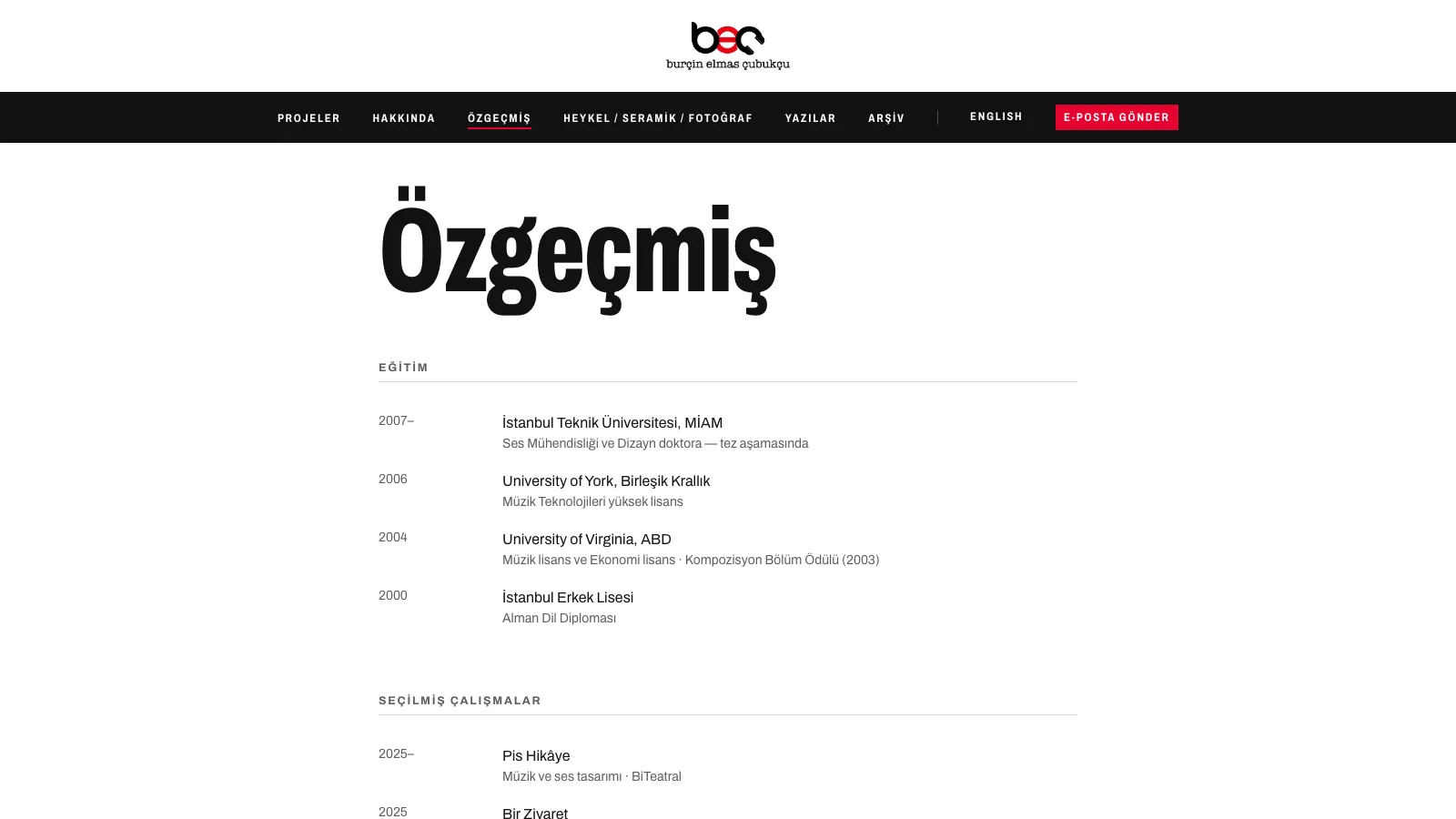
- What can be seen — burcinelmas.com, open today
The plan first, the site after
We did not simply say “build the site”:
“Otherwise, if we had said build me a website with this information, it would have done it, by the way. But then we would have kept patching it afterwards.”
“Yoksa bu bilgilerle bana web sitesi yap deseydik yapardı bu arada. Ama sonra hep yama yapardık üzerine.”
Instead, the AI asked questions. It read the folder, the CV and the video archive and came back with twenty-eight of them: which profession leads, which languages, which works, how people get in touch. Burçin answered each one and turned some suggestions down. The sharpest finding was the AI’s own:
“This is not a portfolio, it is an illustrated CV. Nobody hiring a sound designer decides without hearing the sound.”
In the same session, the mobile number and home address in the CV were kept off the site; a credit written up as hers alone turned out to be shared work and was corrected.
At the end of that session there was no site — there were decisions. In my own words that day: “Right now all we have is our decisions.”
She did not like the design, and fixed it herself
The first design came out boring. What is interesting is that she solved this on her own: between lessons she ran the design tool, disliked the result and wrote her own prompts — “The design came out really boring. Reroll.”
“Tasarım çok sıkıcı oldu. Reroll.”
She had photographs and links added and pushed the code to a repository she had opened herself. Then she stopped:
“I waited for you so that I would not do something ridiculous.”
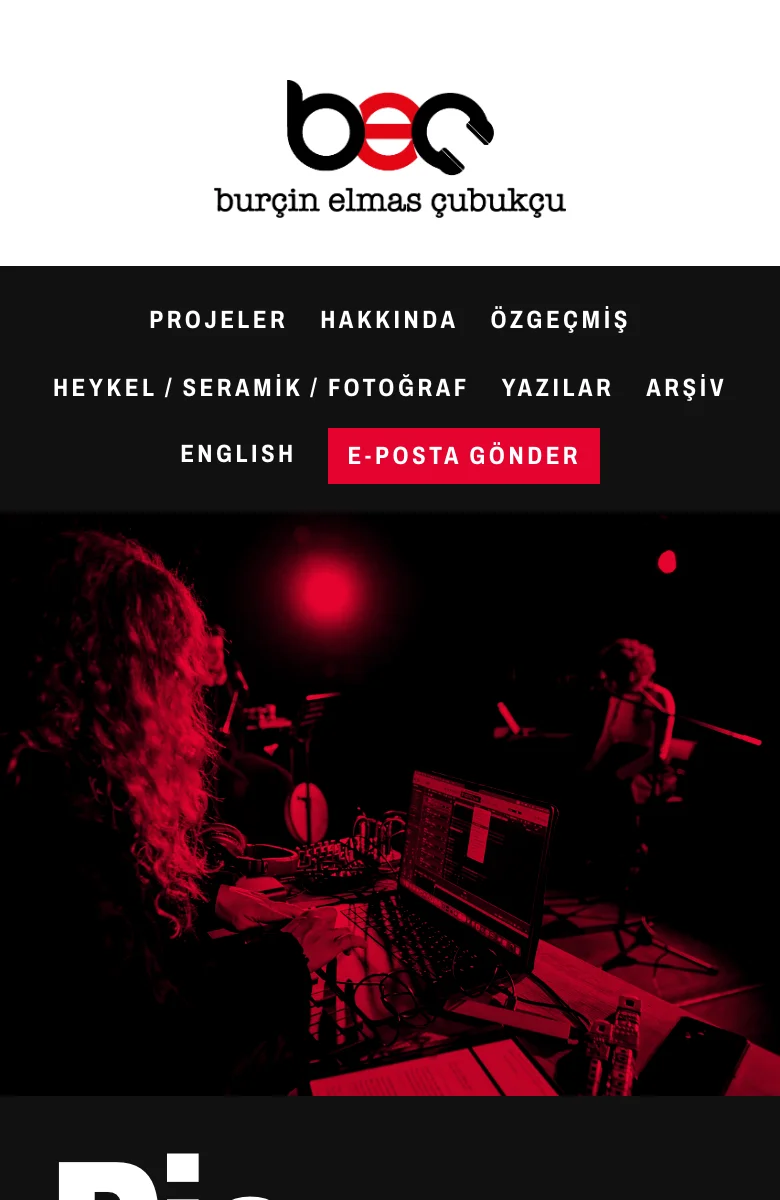
The direction she chose was a record sleeve, in the same language as the black and red in her logo:
“It seemed to me it used black and red really beautifully. That is why it came out the way I wanted.”
When the site went live, what took the fear out of it was reversibility: seeing that anything broken could go back to the way it was.
The tools came into her own field
The portfolio was the visible part of the work. What she was really curious about was her own music program — and the AI connected inside Ableton Live. The moment the connection was made:
“I am so excited right now.”
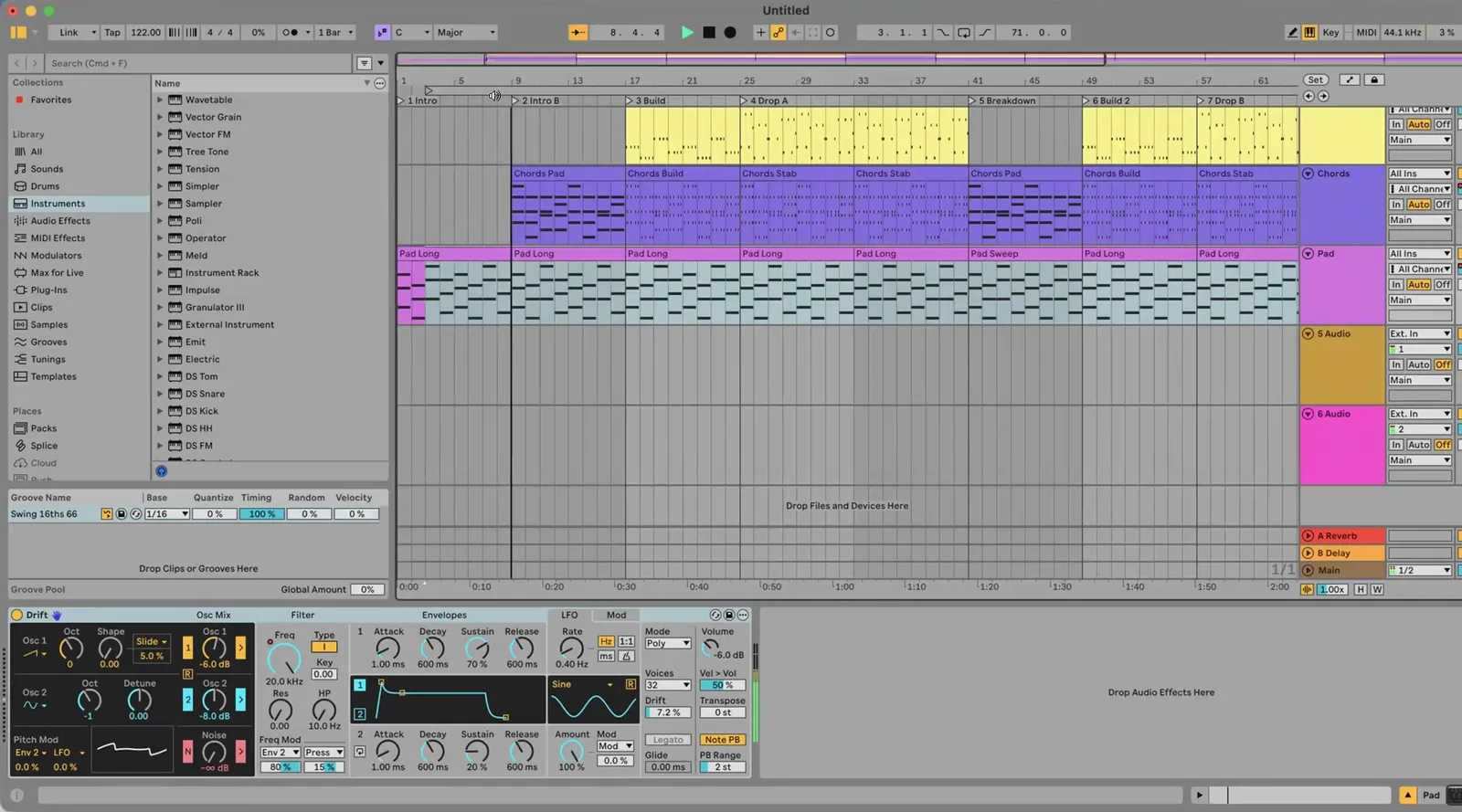
An arrangement came out in that same session and we listened to it together. There is no claim here about the quality of the piece; what happened was that I handed it back to her:
“The ball is in your court. You know better than I do what can be done in Ableton.”
Then it was the turn of the other instruments. Access to Max MSP, the tool she wrote her master’s thesis in, was tried. On the idea of an electronic instrument, a circuit was designed with tscircuit — schematic, printed board and bill of materials. The circuit is ready, but it has not been tested.
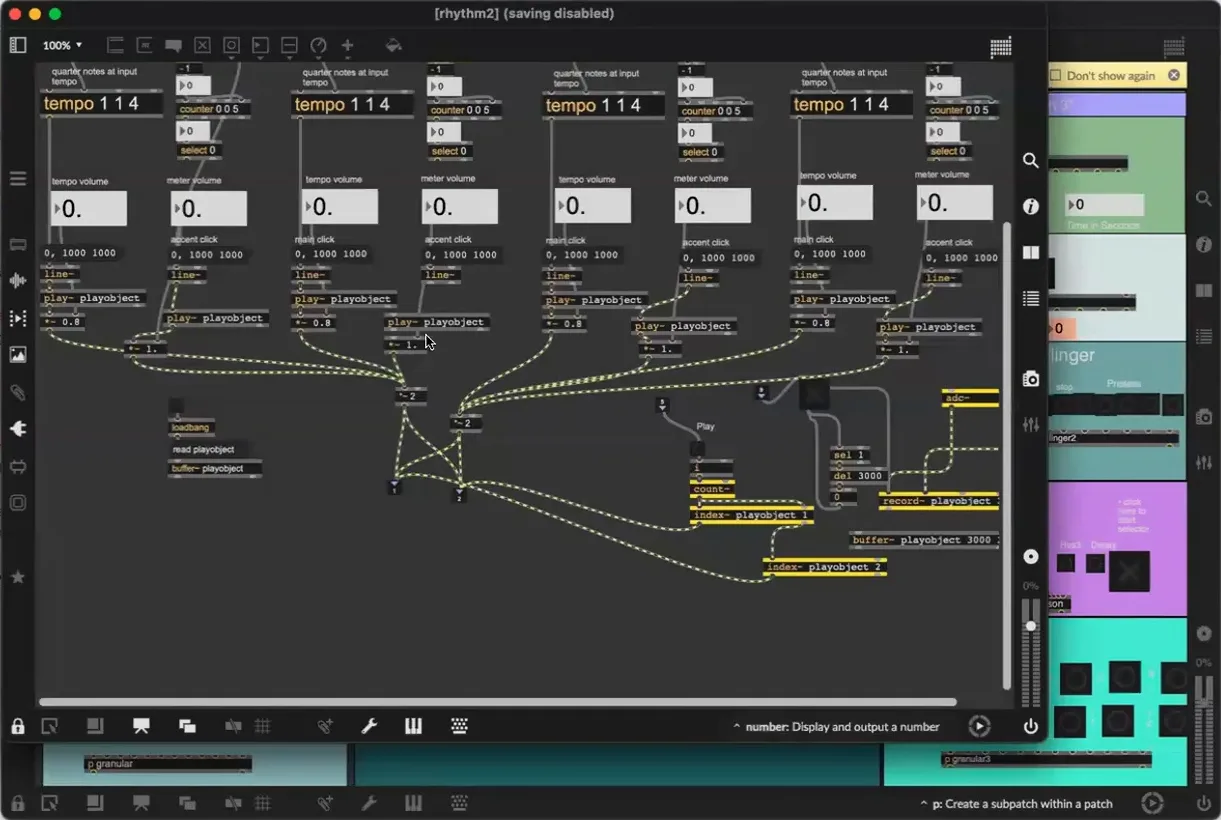
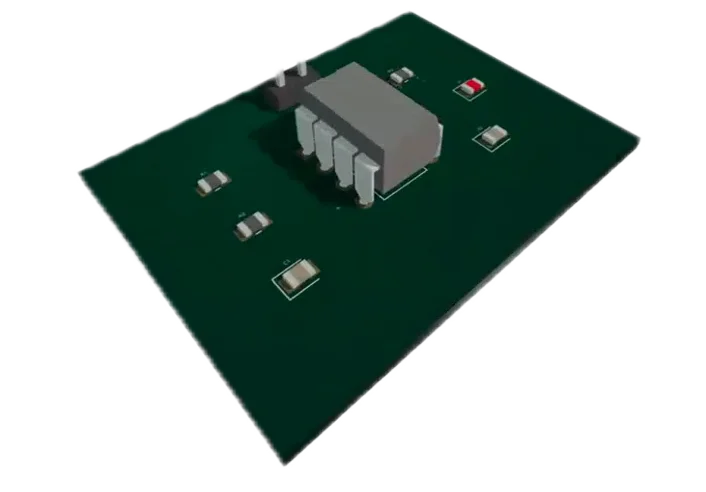
Ableton and Live are trademarks of Ableton AG; Max is a trademark of Cycling '74. They appear here only to name the tools used in the lessons.
The point here is not which program was used. If you are the one who knows the tool of your own field, you can run the AI inside that tool rather than outside it.
“God, I am glad I asked. I am glad the subject came up.”
“Allah’ım iyi ki sordum. İyi ki konu buraya geldi.”
The result
What stands at the end of five weeks:
- burcinelmas.com is live — six sections, two languages, the code on GitHub, the design in the same language as her own logo.
- The site is in her hands: before the last session she changed a heading on it herself, and she can run it from two different computers.
- An AI connected to Ableton Live, and an arrangement that came out of that session.
- A thesis assistant with its rules written down.
- A first circuit design — ready, but untested.
The real change is not in the tools but in whose hands are on the keyboard:
| At the start | At the end | |
|---|---|---|
| How she saw AI | “Because I did not want to create a monster with my own hands.” “Elimle canavar yaratmak istemediğim için.” | “God, I am glad I asked. I am glad the subject came up.” “Allah’ım iyi ki sordum. İyi ki konu buraya geldi.” |
| Saying what she wanted | “I accept that I was not getting what I wanted because I was weak on the prompting side.” “Prompt kısmında zayıf kaldığım için istediğim şeyi alamadığımı kabul ediyorum.” | Writes her own prompts for the design tool, asks questions out of her own field |
| Setup | Every step together | Set the second computer up herself |
| The site | “I kept putting the website off.” “Web sitesini öteliyordum.” | “I had it write projects instead of works.” “Ben işler yerine projeler yazdırdım.” |
It wasn’t easy
This is the most important section on this page.
- The plan was tiring. At the end of a long session there was no working site in hand; there were decisions. In Burçin’s own words: “Those questions wear us out.”
- The first design came out badly. A step had been skipped: one direction was produced without options being offered first. The options were generated again afterwards.
- The AI got things wrong. It installed an old version of the site framework — it knew whichever version existed on the date it was trained — and was made to do it again. In another session it found something it had broken itself.
- The tools were frightening. In the hosting panel: “So that I don’t do anything wrong. I didn’t change a thing. I was scared.” Two repository mix-ups, old domain records, plugins that would not run in the cloud.
- The concept load was heavy. Domains, pushing and pulling versions, context, tokens, the difference between a local and a cloud session. At one point: “My brain stopped.” She thought she had installed a tool; she had not.
- Material was missing, and stayed missing. There is no audio or video recording of the work of recent years, and some of it is blocked by contract. In her own words the site “did a nice job even though there is little content” — “İçerik az olmasına rağmen güzel yapmış” — that is, the shopfront is ready; the shopfront is not full.
- There is no measured gain in time or money. No number on this page carries a claim like that.
- burcinelmas.com is live: six sections, two languages, the code on GitHub
- Decided which of the five professions leads on the home page
- Changed a heading on her own site herself, between lessons
- Runs the site from two different computers; set the second one up on her own
- Claude connected to her own music program, Ableton Live
- A study assistant with written rules for her doctoral thesis
“It was really good for knowing what I am capable of.”
“Ne yapabildiğimi bilmek açısından çok iyi oldu.”